VOICED. with Daniel Charlton on Social First Content and Voiceover
Social media has rewritten the rules for voiceover and spoken voice performers. The overly polished voiceover has been replaced with something newer and maybe a bit messier? The good kind of messy. Conversations, imperfections, lived identity, and something that feels like a real person.
Daniel Charlton is a Creative Producer at Ladbible, the most engaged publisher on social media of all time. He’s spent his career producing content for socials that grabs attention. From brand partnerships with McDonald's and Disney+ to growing niche content creators into recognisable names.
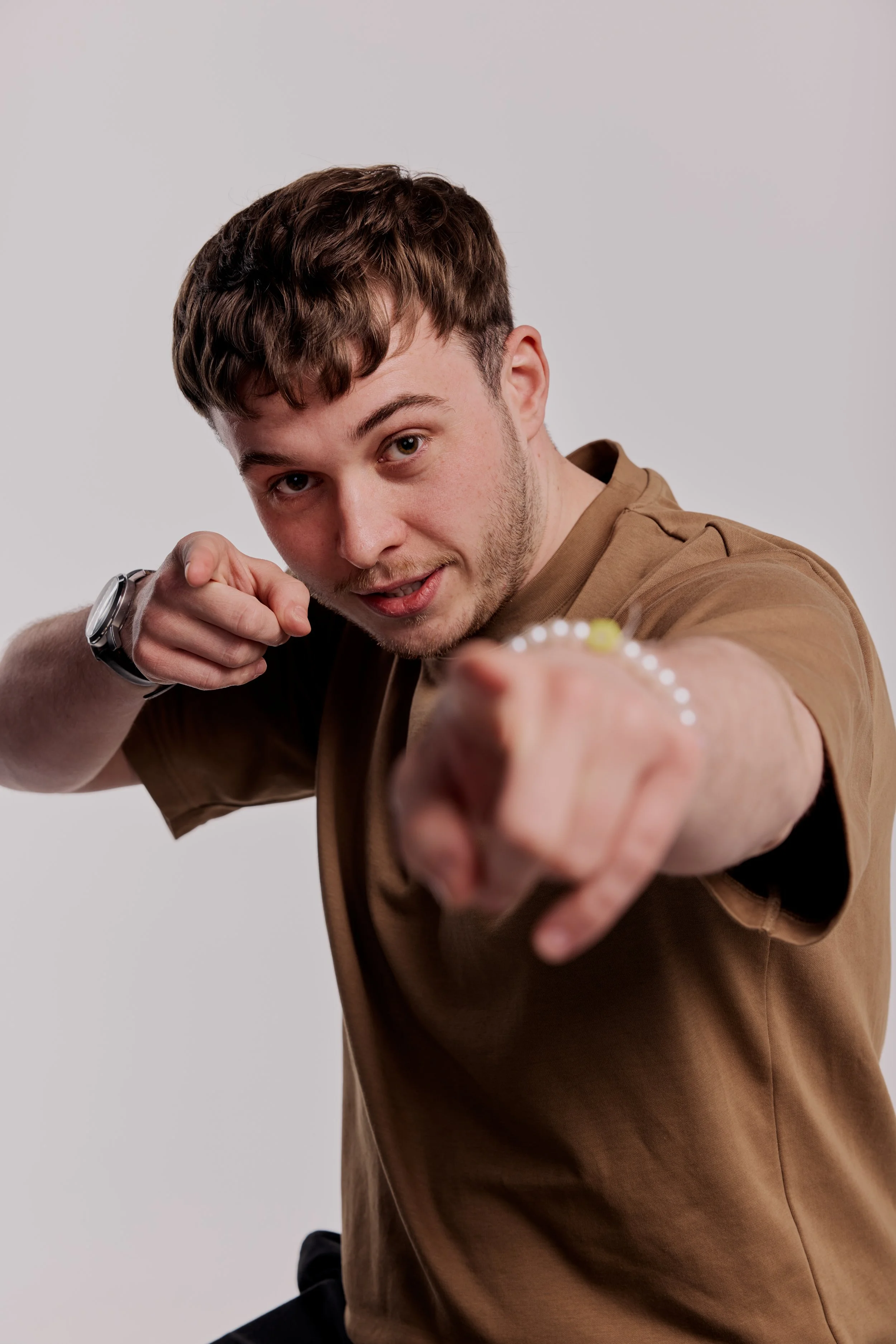
Daniel Charlton
Thanks for joining us, Dan. Can you tell us a little bit about your current work and background?
Thanks for having me! I'm currently a Creative Producer working at LADbible group, mostly spending my time directing branded social content for a range of clients such as Disney+, McDonald's, Meta and more.
As a creative producer; I write scripts and storyboards, direct the shoots and oversee the edit processes. Often with support from the amazing team I have around me of creatives, producers, editors and much much more. Also as someone with quite a loud voice and big personality, I do tend to get roped into the occasional presenting and voice over job. (although there's not much demand for a BTEC Brummie voiceover)!
I'm a Brummie Born and Bred, but I've been living in SW London for just over 1.5 years now and I can say I understand why so many people choose to live in the big city.
What kind of spoken voice do you tend to use more across social content: voiceover artists, content creators or something different?
It really depends on the client, context and content. The longer I've worked in the creative field, I've felt like any combination of approaches can work as long as the execution is right for the audience. For any of our internal work like campaign sizzles or wrap-up videos, I would always go for a voice over artist and then generally for any social content I like to lean towards a content creator.
I think there's a merge that's come about on social media which is the voice behind the camera, less of a traditional voiceover but more of an off screen actor aimed to bring some extra context to the videos.
What does the voiceover brief tend to look like on a social campaign - how specific does the direction get?
I think when it comes to collaborating with any talent I always try to give as much context to the project as possible, even if it's not necessary, just to give them as many different points of reference to assist their process. Something as simple as where the video might be played can change your approach so I think it's a nice touch to help bring someone in to the project as closely as possible.
With social campaigns, the brief is often short and simple in my eyes. Help grab attention from the first frame. This can sometimes be platform specific as some videos play without sound automatically but I like to assume that people will hear the very first moment so we should treat the audio the same way we do the video, what will grab the audience and make them stay?
It can't be just me that feels like over produced content makes me scroll away as I feel like I'm being sold too, and the same goes for a more traditional Voiceover in social content. When I hear that TV/Radio voice I feel the same way about seeing a massively polished or framed shot in video, where's the brand going to show up. Often, I try to push our content to feel personalised to either the people on the screen or off by feeling more casual and chatty.
When it comes to social content we talk a lot about 'thumb stopping', but this tends to rely on visuals and caption hooks - in your opinion how can we hook an audience on social media using only the spoken voice?
I feel like I see the term 'Attention Economy' all over my LinkedIn and it makes me want to throw up in my mouth, but it is true that we're all fighting for engagement online against creators, brands and viral content. The first few seconds of that content decide whether someone will watch or scroll on and to ignore the sound and focus only on the visual seems like a wasted opportunity.
I always ask myself what makes me stop on content and the truth is that it really can be anything as long as I find it interesting. What you're saying matters just as much as how you're saying it and why. I'd love to say there's a magic formula to success with virality but every time you come close to finding a string of components that work, a new video or trend appears that breaks everything you believe.
There's a trend toward more lo-fi, conversational voiceover on social. Do you think that's a genuine style shift, or are the platforms dictating the performance?
When we all spend so much time online it's so easy to allow others' content to influence your own and sometimes you're right too but it can be hard to keep your own voice when you compare so much. Brands are looking to success stories on social and adopting much more lo-fi content styles to continue talking to their audiences, but that doesn't mean there's no place for bespoke and well crafted production either.
Most platforms have algorithmic approaches to distribute content and when it seems they prefer the more 'casual and conversational' styles of content, there's a reason it floods onto our feeds. When I interact with content online I would like to say I can tell when something feels genuine or not and normally the stand out way for me to know, is the voice I hear.
There's endless combinations of visuals and voices that can work together to create excellent content, I think the key is how you feel when you watch the content back. You'll know whether it feels right or not.
Do different platforms demand different styles of voice and performance?
It can be easy to bulk all social media platforms together and say they all like short, snappy and lo-fi content but it's more defined than that. There isn't a one size fits all rule that says a certain piece of content won't work on a platform, the same way that if you do every trending stylistic change you're not guaranteed success.
In short, yes. More to the point, I would say it matters who you're talking to and why.
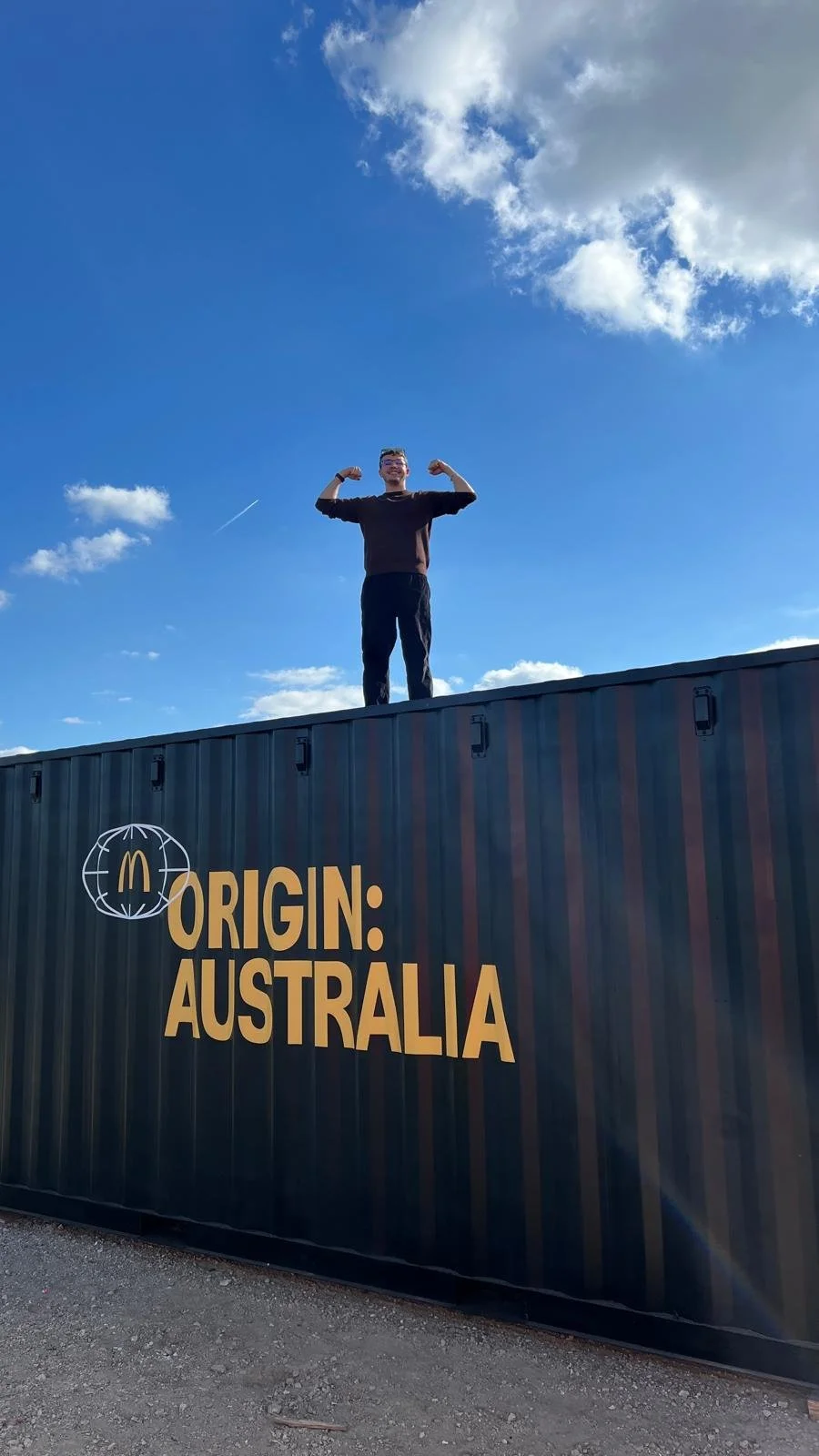
On set with McDonalds BTS
What about brands versus content creators with a less commercial approach - does the demand for voice look different here?
Again, it can be easy to say there's clear formulas for what works but every piece of content is individualistic and unique. You could have a beautifully crafted voice over on top of slightly hectic phone footage, making a viral hit.
If I was working with a brand vs a creator, the main thing I would look at is how do I keep the voice feeling authentic for each situation. A brand often has guidelines, a marketing team and a script that's been approved by 10s of people. Compared to a content creator who is likely just a person with a personality and skills. Both require similar research to really make sure the pay off is fitting to the purpose.
What's with everyone holding the tiny mics?! Haha!
Does anyone know where this started? I can't say when but it just feels like they appeared out of nowhere and now it's a trend to hold a clip on mic or have a tiny microphone in between your fingers. There's something very cute and disarming about seeing them and maybe there's something in that.
On the flip side, a shameless plug is that our Betches UK team rolled out some new microphones on the red carpets recently and they've been a smash hit. Not exactly a tiny mic.
*I had no involvement, just being a supportive fangirl!
Are there any voices you use or hear that you keep coming back to because they just work on social? What makes them work?
Is it shameful to say I love a regional accent? I think I have a soft spot for a hearty and warming northern accent that just brings me to look outside the M25. I promise I am not biased but there's just something about them.
If I was trying to list what would make a voice work on social, I would focus less on the what and more on the why. Why do they care, why are they speaking, why should I listen?
Often, if you're just collaborating then these might be out of your remit or pre-determined for you so I'd then look at it as how can I make someone care or listen.
And to that, I don't have an exact answer (sorry).
In five years, how do you see voice and spoken content evolving across social?
When social media became a thing, I'm sure there was this vast intrigue to see what was happening in places you've been or seen. But now, I just love seeing content that exists in places I know or love.
I think we'll see more focus on localised content and niches relevant to us, as we all get fatigued about seeing the same mega creators.
Last one, for anyone trying to break into voice work or develop their presence in the social space, what should they understand about this world before they step into it?
One of my biggest worries when I started out in the creative world was whether or not I would fit in, it's a hard step to get to the point of putting yourself out in the world especially for the first time as you're afraid of the response that will come back your way.
To any creative stepping into the field, your greatest strength is what makes you unique. Your voice isn't just the words you say or the way you say them, it is who you are and why you are. Don't go changing yourself because someone else is having success, practice your craft and your audience will come.
I hope I never lose my lovely Brummie accent, not because it helps me stand out in a room full of Londoners, but because it is a direct connection to my roots and my soul.