
VOICED. with Tomohiro Roddy from Drama School Grad to Working Voice Actor.
VOICED. is back. Our founder Alex Griffiths is back interviewing a bunch of creatives working across voiceover, audio, performance and pretty much any other voice related field. Storytellers and those doing it their own way.
First up, it’s Tomohiro Roddy: a 2026 Manchester School of Theatre graduate, finalist in the 2026 Spotlight Prize, and voice actor. Tomo has gone from drama school to working voice actor at full speed, landing a role in a major UK game straight after graduating. He talked to us about his post drama school voice gigs and how he handles it all as newcomer.
ALEX: Thanks so much for chatting to us Tomo. Can you tell us a little bit about yourself?
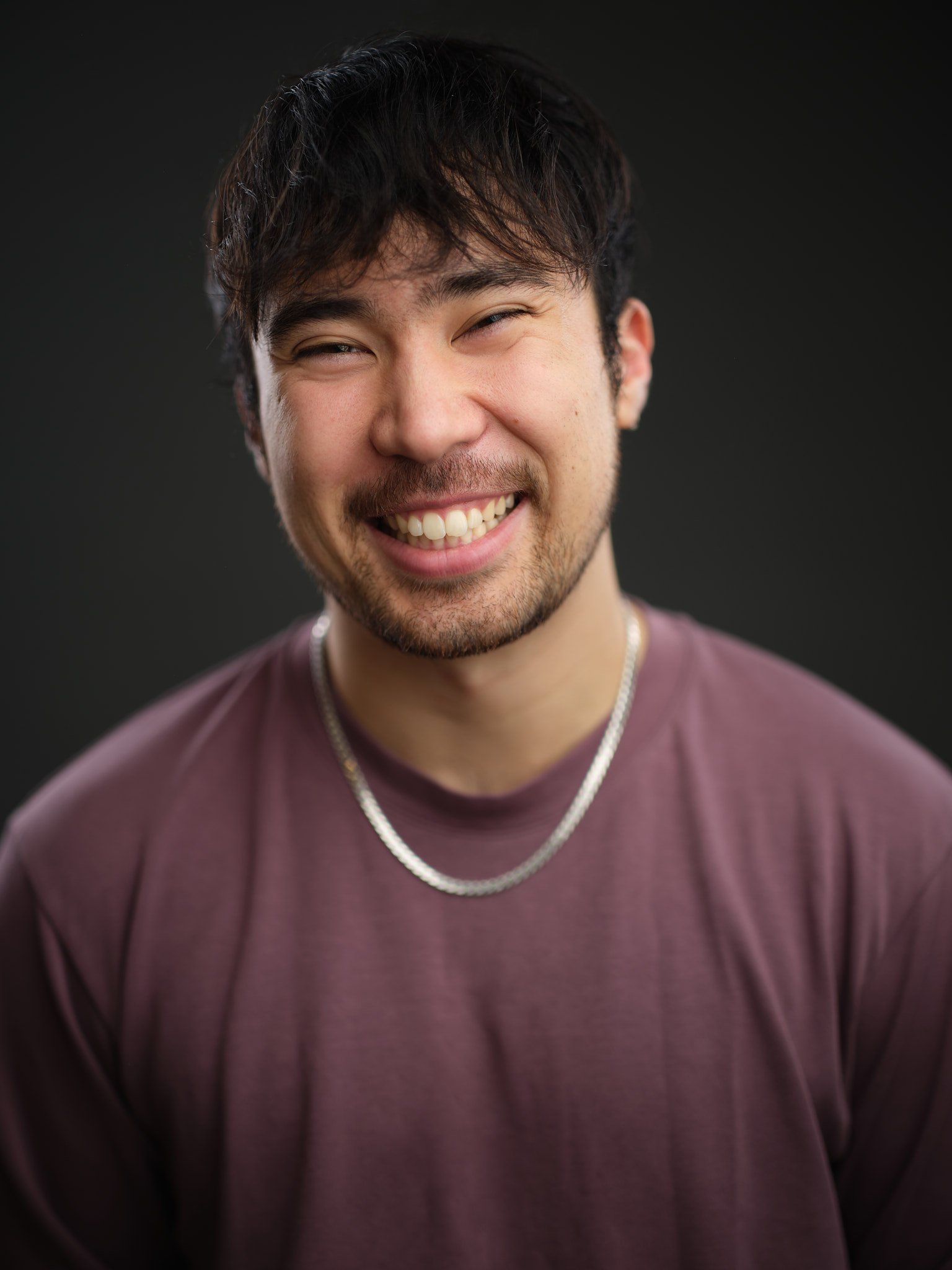
Tomohiro Roddy
TOMO: I’m Tomo! I’m a half Japanese, half English actor, from the city of Bristol. I’m a ‘26 graduate from Manchester School of Theatre, and a ‘26 finalist for the Spotlight Prize. Outside of acting I like to do a mixture of things, whether it’s watch films, gaming, music, skateboarding, or basketball. Since graduating, I’ll be honest, it’s been scary. The arts is such an interesting field, nothing is ever certain. It can be frustrating, but it’s never boring. Weirdly, I’ve learnt to appreciate that more about it.
ALEX: How did you find your way into voiceover?
TOMO: Most of my training had been very pure acting focussed up to that point. But I knew I was always interested in voice acting. I just didn’t know how to start that journey! I mentioned to my agent Phil Belfield (Belfield & Ward), that I was interested in exploring voice acting. Coincidently, he had recently met up with Simon Cryer from Damn Good Voices, and gave me the opportunity to have a closer look into that world by helping us meet! I began to realise how important relationships are in this industry and that sometimes all you have to do is ask.
ALEX: Was voiceover something you always wanted to explore?
TOMO: As a kid I grew up watching A LOT of cartoons. I also played A LOT of video games. That being said, I still do now! Naturally I found myself copying all those voices and accents, imagining myself in those worlds. In fact, I distinctly remember being told off in primary school a lot for doing voices or staring outside the window being ‘away with the fairies’, because all I could think about were these other worlds and being in them. Basically, anywhere ‘away from my classroom’. It was as I got older I then began to realise that the people behind those voices in the shows I loved were actors and that they are also people with crazy imaginations. And that it was in fact, something I could be a part of!
ALEX: How did your professional training support branching out into voiceover?
TOMO: Over the years, I’ve had the privilege of working with many different practitioners, mentors, and teachers. But what I’ve picked up on the most is, no matter how good you think you are, you will always be better by warming up. It sounds obvious, I know. But the me before all my training would have no idea about how significant it is to train and condition your body by doing those little practices. As long as I know I’ve warmed up, and gave the best performance I could. Then that’s all I need to worry about. As opposed to believing I let myself down by thinking ‘if only I had just warmed up beforehand’.
ALEX: What have you learnt about your voice since graduating?
TOMO: One of my favourite things I learned is that people want you for YOUR voice, not someone else’s, so embrace it! We all have special qualities that are unique to us and that is what makes us all so beautiful and important. Fiona Boylan was definitely one of the key figures in my training that helped me realise that. And taking that sentiment with me to all my work has made me realise it couldn’t be more true.
ALEX: Have there been any surprises since working professionally in voiceover?
TOMO: Voiceover teams move quickly and efficiently. Enjoy the space while you can. It goes back to the reason why you're there in the first place. The client for whatever project you're working on wants you for YOUR voice. So once you're in the booth, for example with video games, you usually only get about two to five takes before moving on to the next line. That was crazy to me the first time round. And there have been times I thought, “really? That was good enough?” Not being pleased with myself. But you’ve got to trust them, because they go through so many actors a day doing hours and hours of recordings. They know what works and what doesn’t.
ALEX: How demanding is working across games? And do you have a favourite genre yet?
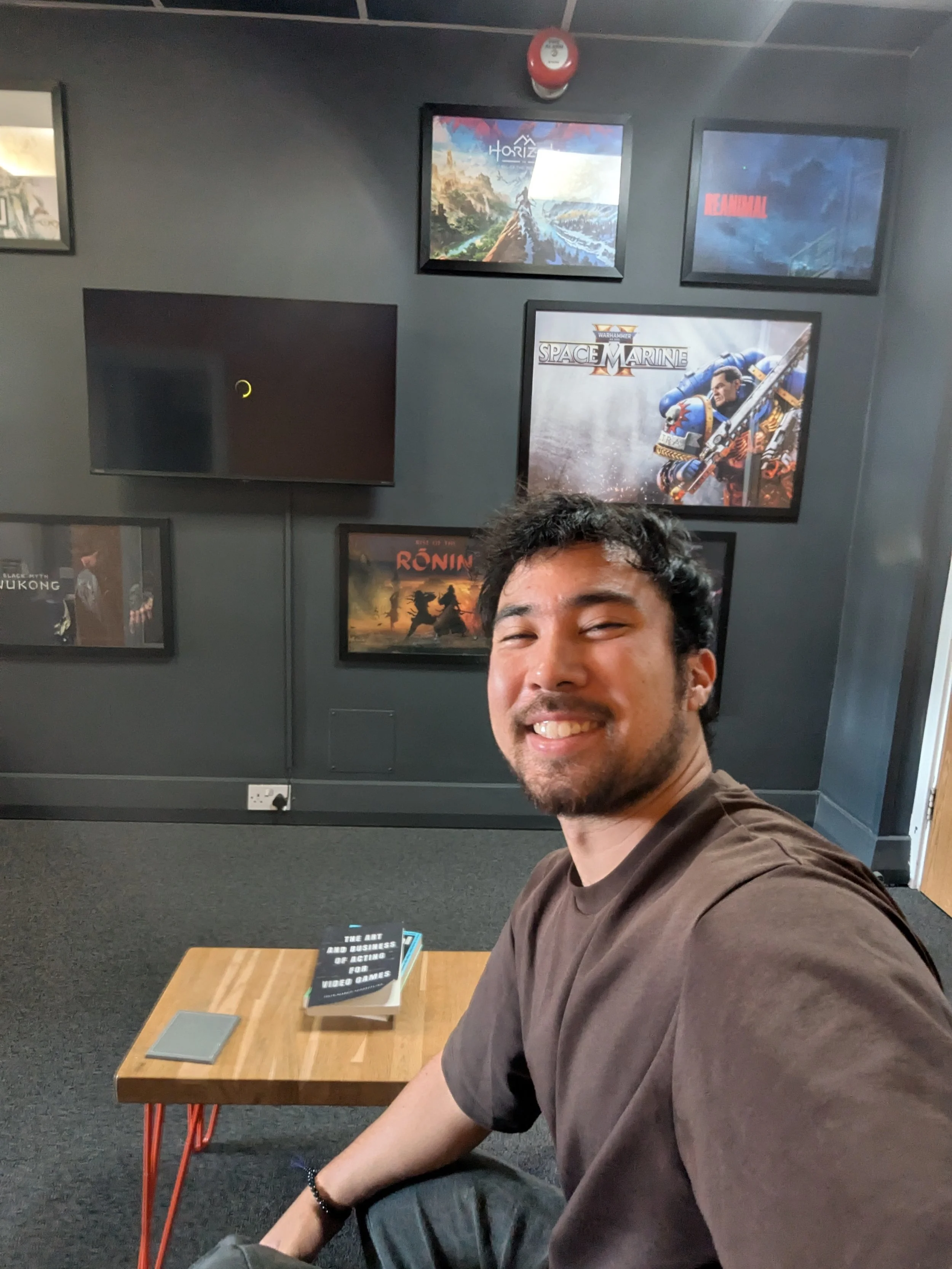
TOMO: I think as an actor just finding their footing in the industry. The most physically demanding part for me is getting to and from each session, figuring out how to budget yourself correctly, where to stay, and finding time on your schedule that works both for you and the client. Once I’m in the room on the other hand, I’m exactly where I want to be. Just like stage or screen, it can be nerve racking. But that’s the moment where all your hard work pays off. So far my favourite genre has got to be any game that involves action or combat. Doing the effort sounds, such as, fighting, getting hit, or dying, gives me a good laugh every time. Just being stood in a room, being watched making strange noises for a couple of minutes non stop is hysterical to me.
ALEX: What advice would you give to someone who is just starting out?
TOMO: Be kind to everyone you work with! We’re all here to create something great, so why make the job harder by being difficult. It can be stressful working in this industry at times, so being understanding to the people whose job is to make you look/sound good can be the difference between an average day at work, to a great day! And crucially, that’s what you want them to remember about you!
ALEX: Tomo, you’ve been amazing to chat to but just one last quick question! Are there any dream jobs you’d like to work on?
TOMO: My heart is always set on projects like The Last of Us, Red Dead Redemption 2, or Life is Strange. It would be a dream to be in a series that has as much of a deep and profound impact on people’s lives as those projects. Where the story telling is almost more important than how a game plays. Playing a video game isn't just experiencing that world, but it’s immersing yourself within it. It’s so much more involved. It’s an escape. And being a part of those journeys and telling those stories is exactly why I chose to act. It’s to please that inner child that loves to play and to share that feeling with others.