
Pride and Voice with Mike Cooper
June marks Pride month globally. 57 years ago an uprising took place in New York city. The 28th June 1969 The Stonewall Inn was raided by police in the early hours, tired of being constantly attacked by police brutality, the LGBTQIA+ community fought back. Marking a new beginning for the gay rights movement around the world. It was a collective of voices that said we’ve had enough. A collective of voices that fought for the rights of those around them. Activists from Black Power, feminist and gay liberation movements came together to resist as one. With key figures including Stormé DeLarverie, Sylvia Rivera and Marsha P. Johnson.
57 years on we still need those voices. We still desperately need unity, allyship and togetherness. So amongst the parties and the merch, the real work is done by constantly amplifying voices and the stories they hold in the fight for equality. Voiceover gives us a unique platform to do exactly that, broadcasting the voices of individuals from all walks of life. And the power a voice holds goes further than many might think. Especially when you hear your own representation, even in the tiniest nuances.
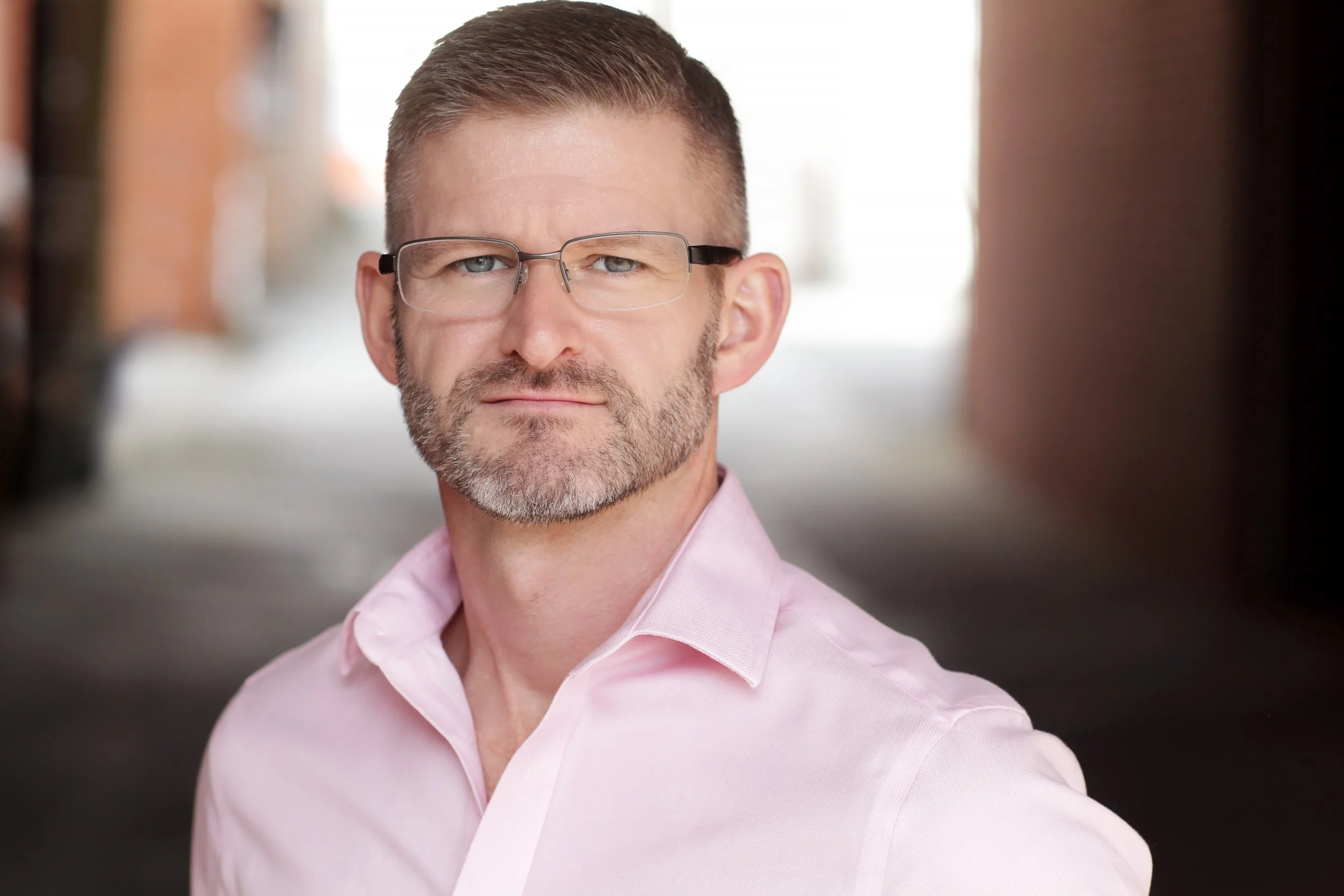
Mike Cooper
Mike Cooper has been working across broadcast and voiceover for over 35 years. He is a fierce champion for LGBTQIA+ rights, gay and HIV positive. We asked him why Pride is still so important, why representation matters across the industry and Mike has shared with us moments of his personal journey.
Thanks so much for joining us Mike and being so open. Can you tell us what pride means for you today?
For me it's about continued visibility. We fought hard for decades to get to where we are and—now that things like same sex marriage are established—it's easy to think the battle is won. But there are still many who would like to take those rights away, and it's important that as a community we continue to show people that we're here and that we're not going away. I live in the US at this point and it's probably clearer here right now than it is in the UK just how quickly the sociopolitical landscape can shift. It feels like the UK follows in the wake of what goes on here in many respects, so I'd urge anyone reading this in Britain to remain vigilant and to keep demanding those rights.
How have attitudes towards LGBTQIA+ voices changed in the industry during your time in it and is there a strong community presence now?
I’ve not felt that much of a shift over the fifteen years I’ve been working specifically as a VO, but in my time before that—in radio and television—things have certainly changed alongside the shift in broader society. I certainly feel there were career opportunities I lost because I was gay back in the ’90s, and I also encountered both homophobia and, equally, the “casting couch” as a barrier to potential work.
I think (and hope) that sort of thing is now far less common, but the siloed nature of how many of us work as VOs can still make it difficult to form a strong, distinct community. That said, the wider entertainment industry—which voiceover is at least tangentially part of—has generally become a far more open and accepting space than it was when I started out, and thankfully most of the colleagues and clients I’ve worked with over the years have reflected that change.
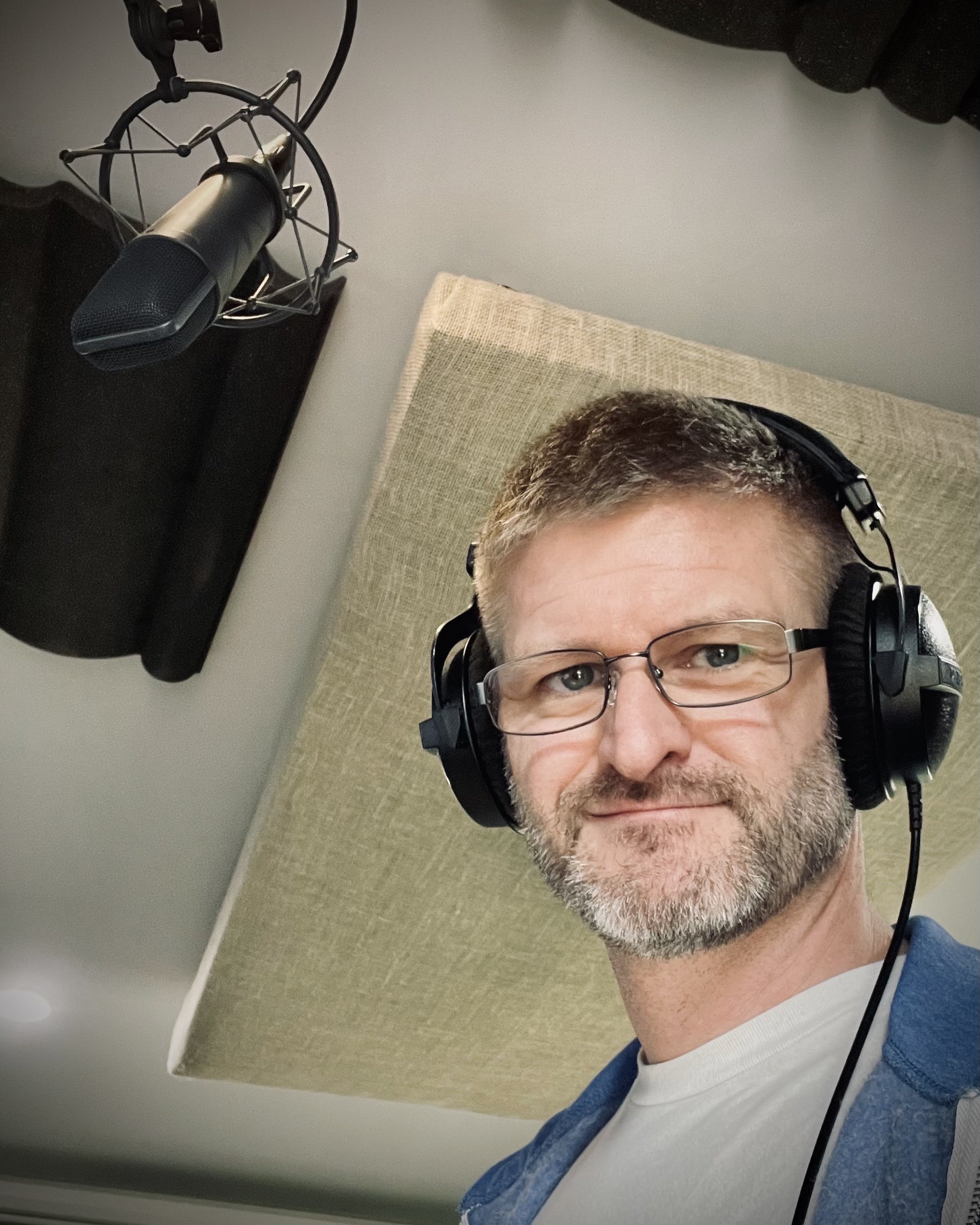
Mike has always been clear that his identity isn't the only lens through which his work should be viewed. He's a narrator and voice actor first, with tons of global campaigns, years on BBC World Service and multiple award wins to his name. But he's equally clear on why visibility matters. He's shared his personal journey with us here, and we're grateful for his openness in doing so.
following words by Mike Cooper
(https://www.mikecoopervoiceover.com/)
Being on the receiving end
When I left school and started work (at the BBC in the late 1980s) it was still acceptable - at least outside London - to openly discriminate against gay people, and to victimise them with cruel jokes that would today be considered unacceptable and abusive. At a time when I was desperate to come out and move on with my life, I was forced to hide my sexuality for several more years.
Coincidentally or not - opinions still remain divided - when I did start to edge out of the closet, I lost my job (the joys of being a freelance) and ended up working in a call centre, where I was passed over for promotion because the team I wanted to join there didn’t want to have to do their night shifts with someone who was gay. Fortunately when I knocked on the door of Central Television in Birmingham, my next boss turned out to be a gay man. I got taken on as a continuity announcer, and things began to shift…
After moving to ITV in London, in the mid-90s, I found myself on the receiving end of sexual harassment by a producer who intimated that yes - I could be his next network promo voice, but only if I performed certain “other” duties too (I declined). And around the same time, I came into work one day and found a copy of my online dating profile from Gaydar pinned up in the break room in my department, complete with NSFW pictures and a checklist of the things I liked to do in bed. (And although a closeted colleague was my prime suspect, I never found out who posted it.)
The words no one ever wants to hear…
In 2002 I was diagnosed with HIV; the result of one poor decision at the start of a relationship, to whose red flags I was blinded by love before I realised I was in an abusive situation… It took me another ten years and two more relationships before I decided that enough was enough and that I was ready to come out again - this time as an HIV positive man - and begin doing my part to advocate for awareness and education.
Taking back the power
In 2012, my American husband Marc and I found ourselves the unexpected cover stars of London’s QX Magazine, for a piece around sero-discordant couples (the term for where one partner has HIV and the other doesn’t).
I say unexpected, because the other eleven couples who were meant to take part lost their nerve and bailed on the project at the last minute. Ironic really, as the very idea of the story was to educate readers and break down prejudice…
You can click here to read the piece in full.
Marc and I were married in Marc’s home state of Massachusetts back in 2010, at a time when the US Federal Government did not recognise our union. That changed in 2013, and in 2014 Marc and I became one of the first couples to emigrate to the USA as a result of our same sex marriage. In 2017 I became one of the earliest naturalised US Citizens to gain citizenship by virtue of the same reason.
These are things I’d never dared imagine as a young, scared teenager - and of which I’m immensely proud.
Changing the world!
Around the same time as the QX article, Marc and I enrolled in the PARTNER Study: a pan-European medical research project that regularly tested sero-discordant couples to discover if a man on successful HIV treatment could pass on the virus to his negative partner during unprotected sex.
Eight years later, we were the only couple from the original cohort to complete the whole study - but the results were conclusive: across the whole of Europe, and thousands of couples, there was not a single case of transmission.
Marc and I were proud to be part of the research that conclusively proved that “U=U” (Undetectable means Untransmittable) - changing the very advice that doctors and healthcare practitioners give to patients all over the world.
Today, I’m happy to be completely out and open as a gay, HIV+ man and to do what I can to help fight ignorance and prejudice in the world.
Can you hear that I’m a gay man in my voiceover work?
No. Why would you? (And what assumptions do you have about what that might sound like anyway?)
Does it matter that I bring my experience and sensibility to your project, and that I represent my community when I’m using my voice to deliver your message?
Yes. Absolutely.
You can read more about Mike’s personal journey here along with exploring his voiceover work and the campaigns he’s worked across - https://www.mikecoopervoiceover.com
The Terrence Higgins Trust is a charity at the forefront of the fight against HIV, with the mission to end new cases of new HIV in the UK by 2030 and eradicating the stigma surrounding HIV. Please check out and share the campaign ‘Can’t pass it on’. It’s very simple: people on HIV treatment cannot pass it on during sex. https://tht.org.uk/about-us/what-we-do/our-campaigns/cant-pass-it-on